
Moodle Sapienza
Blocks 1
Blocks 2
Blocks 3
Blocks 4
Why-is-it-difficult-to-measure-the-flow-rate-of-high-viscosity-fluids
Why is it difficult to measure the flow rate of high viscosity fluids?
Low viscosity liquids such as water or milk flow evenly, and ordinary flow meters can accurately measure them. But high viscosity liquids are different. High viscosity liquids flow slowly, have high viscous resistance, and are prone to forming uneven velocity distributions in pipelines. The velocity at the center of the pipeline is fast, while the velocity near the pipe wall is slow. This uneven flow can cause significant measurement errors in instruments such as turbine flowmeters and orifice flowmeters that rely on flow velocity uniformity. In addition, high viscosity liquids can easily get stuck in the moving parts inside the flowmeter, causing equipment wear or blockage, increasing maintenance costs and downtime.
Therefore, measuring high viscosity liquids flow rate requires the use of specialized flow meters that do not rely on flow velocity distribution and can withstand high pressure drops. At present, the two most reliable technologies recognized in the industry are Coriolis mass flowmeter nd oval gear flowmeter.
Coriolis mass flowmeter: the most adaptable high viscosity flowmeter
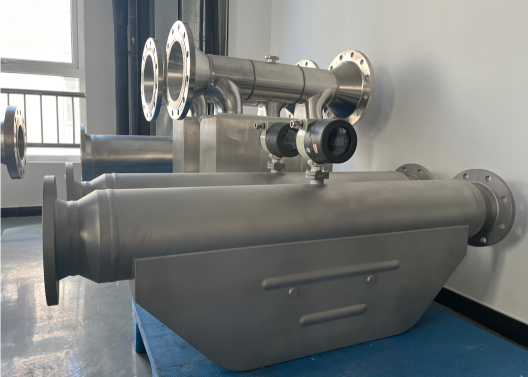
Coriolis flow meter for viscous liquid
Coriolis mass flowmeter is the most commonly used instrument for measuring high viscosity fluids. There are no moving parts or obstacles inside its measuring tube, and the fluid can pass smoothly. This structure brings several obvious advantages:
Direct measurement of mass flow rate: accuracy can reach ± 0.1%, without the need for additional compensation based on temperature, pressure, and other operating conditions.
Can measure media containing solid particles: There are no blocking structures inside the pipeline, so it can measure high viscosity media containing solid particles such as slurry and suspension.
The viscosity measurement range is extremely wide: it can measure liquids with a viscosity of up to 500000 cP (centipoise) or more.
No need for straight pipe section: The installation position is flexible, especially suitable for working conditions with limited space.
A single mass flow meter can simultaneously output multiple parameters: mass flow rate, volume flow rate, density, and temperature can be measured simultaneously.
The disadvantage of Coriolis mass flow meters is that the initial investment cost is high, and the higher the viscosity, the greater the pressure drop in the pipeline, which may require the installation of a larger power delivery pump. In addition, if the installation support is not firm, the mass flow sensor is prone to interference from external vibrations of the pipeline.
Oval gear flowmeter: an economical solution for measuring clean high viscosity liquids
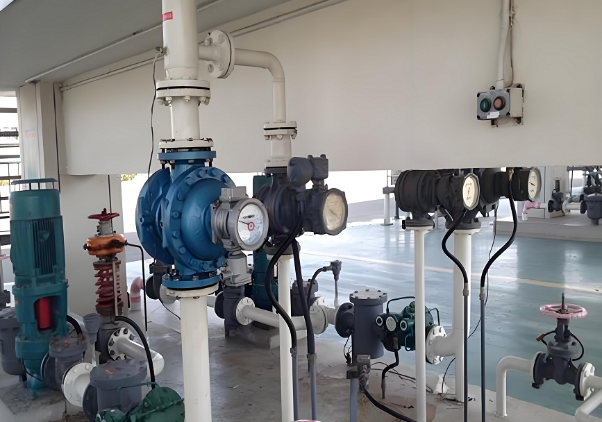
High viscosity fluid flow measurement economical choice: Oval Gear Flow Meter
The oval gear flowmeter belongs to the volumetric flowmeter, which uses two interlocking elliptical gears to divide the liquid into small units of known volume, which are passed through the instrument in sequence to calculate the total flow rate. Due to the direct measurement of volume, the accuracy of the oval gear flowmeter is not affected by the viscosity of the medium, and the measurement results are stable and reliable.
The main advantages of elliptical gear flowmeter include:
l High precision: Conventional precision can reach ± 0.5%, and it can maintain stability over a wide range of viscosities.
● Low pressure drop: The instrument structure is designed reasonably, and the pressure loss when the fluid passes through is very small.
● No need for electricity: The mechanical pointer head does not require an external power supply, making it particularly suitable for use in remote or explosion-proof areas.
l Low cost: For applications involving clean liquids, elliptical gear flow meters made of carbon steel are much cheaper than Coriolis mass flow meters.
l Easy installation: No need for upstream and downstream straight pipe sections, can be installed in locations with limited space.
The limitation of elliptical gear flowmeter is that
it is only suitable for measuring clean liquids without solid particles, and the gear clearance is very small. If impurities are mixed in the medium, it is easy to cause gear jamming or wear. In addition, gears are moving parts that require regular maintenance. Large caliber elliptical gear flow meters also have a significant increase in volume and weight. Also normal oval gear flow meter can only measure liquid within 2000 cp viscosity.
Micro Oval gear flowmeter : an ideal choice for low flow applications
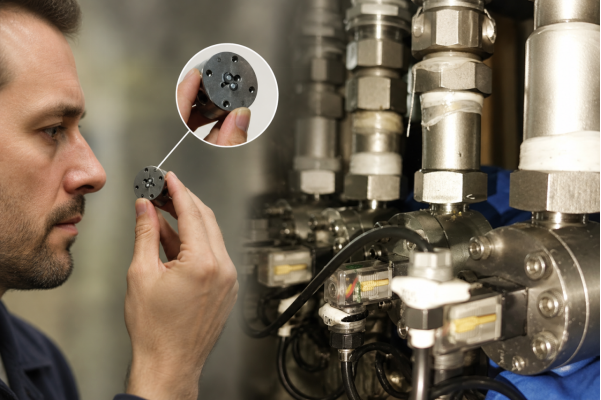
Micro Oval Gear Flow meter for low flow high viscosity fluids
For applications such as chemical dosing, additive injection, and laboratory liquid preparation that require precise measurement of small flow rates, small-diameter oval gear flow meters are a good solution. This type of instrument adopts the same measurement principle as the large-diameter oval gear flowmeter, but is specially optimized for extremely low flow situations. It can measure a minimum flow rate of 0.5ml/min, and the accuracy can still be maintained at around ± 0.5%. For clean high viscosity media and low flow applications, small-diameter oval gear flow meters are a cost-effective alternative to Coriolis mass flow meters.
Quick selection suggestions
If the medium is a clean liquid with a viscosity below 2000 centipoise and cost control is required, it is recommended to prioritize using an oval gear flowmeter.
If the viscosity of the medium is high, or if it contains solid particles or slurry, or if the process requires direct measurement of mass flow rate, it is recommended to choose a Coriolis mass flowmeter.
If it is an extremely low flow application, small oval gear flowmeter and micro Coriolis flowmeter are both highly accurate choices.
List of Common High Viscosity Liquids
Common high viscosity liquids in industrial sites include heavy oil, crude oil, asphalt, tar, honey, syrup, molasses, chocolate, toothpaste, latex, epoxy resin, polymers, lubricants, greases, coatings, paints, paper pulp, and so on. These media are widely used in industries such as oil and gas, food and beverage, chemical, paper, and coating manufacturing.
About Silver Automation Instruments
Silver Automation Instruments is headquartered in Nanjing, China, specializing in the production of industrial automation instruments such as Coriolis mass flow meters, oval gear flow meters, electromagnetic flow meters, vortex flow meters, pressure transmitters, liquid level instruments, etc. The products are exported to customers in industries such as oil and gas, water treatment, food and beverage, and chemical. The company provides full process technical support from selection consultation to customized solutions.
Contact Information
Email: sales@silverinstruments.com
Phone:+86-25-52155837
WhatsApp:+86-18936759191
Website: www.silverinstruments.com